Scientists reveal hidden energy-loss mechanism in silicon carbide defects
Researchers at UChicago PME developed a computational method that simulates the full optical cycle of spin defects, including internal conversion. Calculations showed that in a silicon carbide divacancy this process affects the excited triplet state lifetime more than earlier models predicted, explaining a long-standing theory-experiment gap.
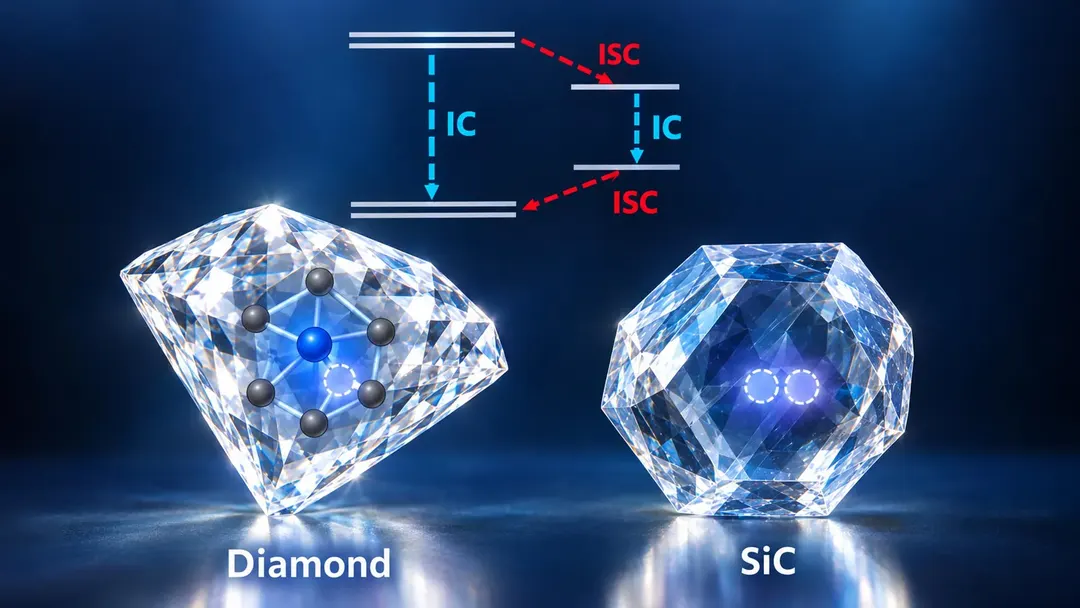
- The method is implemented in the open-source GPU-optimized WEST code
- In diamond, calculations matched spectroscopy: conversion dominates in singlet states
- In silicon carbide the conversion contribution exceeded earlier models
- Findings were published in Physical Review Letters
Read next
Science