Deep-Sea Rocks Spontaneously Combust When Brought to Surface
USGS researchers collected 57 metal sulfide-rich rock samples from the Escanaba Trough off the U.S. West Coast, and two spontaneously combusted when exposed to air. The rocks were mainly nanocrystalline marcasite, an iron sulfide unstable in oxygen, raising safety concerns for deep-sea mining.
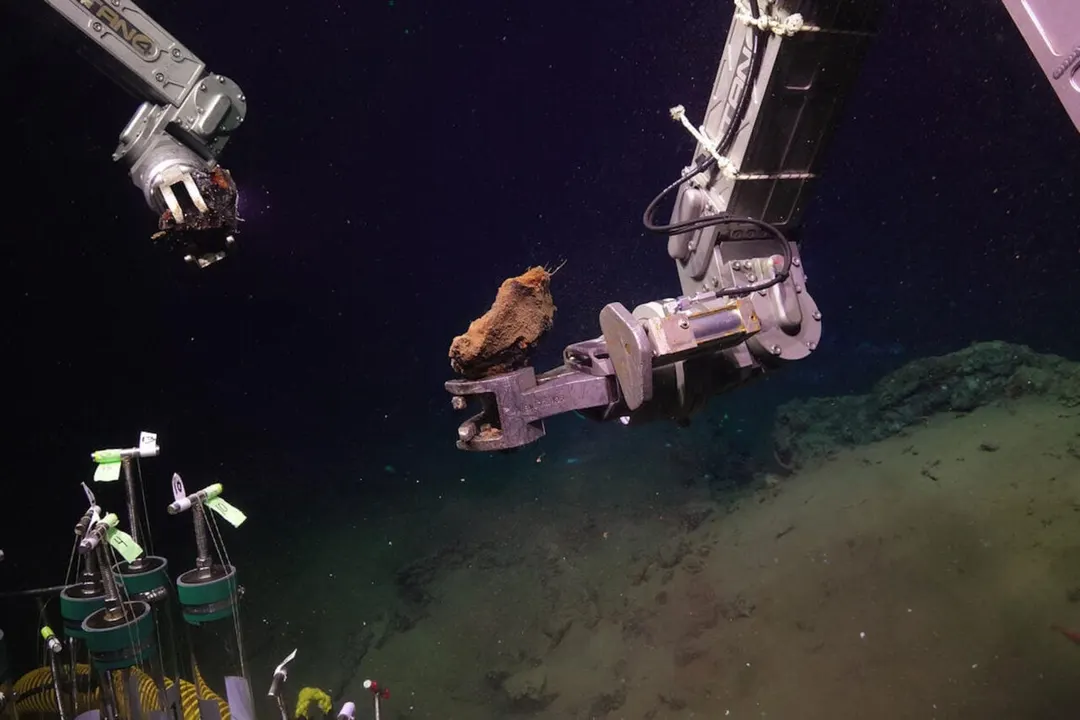
- 57 samples collected from four sites in the Escanaba Trough
- Two samples spontaneously combusted when exposed to air
- Cause is nanocrystalline marcasite, unstable in oxygen
- ISA has issued 31 exploration contracts for sulfide minerals
Read next
Science