Scientists explain why seafloor rocks caught fire in the lab
USGS researchers found that two metal sulfide-rich rocks from the Gorda Ridge off the Oregon-California coast self-ignited in the lab. The cause is nanocrystalline marcasite with crystals 5–16 nm across, which oxidizes in air and releases heat.
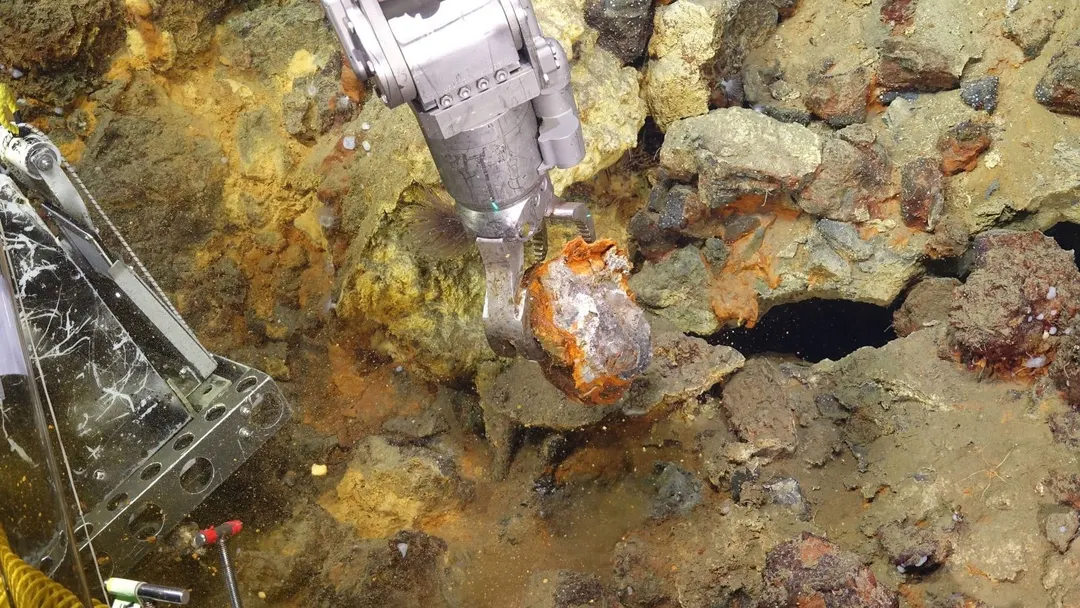
- Samples were collected in 2022 by the ROV Jason at Escanaba Trough
- Marcasite crystals 5–16 nm wide give oxygen an enormous surface area to react with
- On the seafloor the rocks sat at 2 °C with little oxygen, slowing the reaction
- Authors warn the chemistry could cause rapid-onset fires aboard mining ships
Read next
Science