ALTK-Evolve: On-the-Job Learning for AI Agents
The ALTK-Evolve memory system turns AI agent trajectories into reusable rules. On the AppWorld benchmark, success rate improved by 8.9 percentage points on average and 14.2 points on hard tasks.

The ALTK-Evolve memory system turns AI agent trajectories into reusable rules. On the AppWorld benchmark, success rate improved by 8.9 percentage points on average and 14.2 points on hard tasks.
According to The Information, OpenAI is close to solving the Hodge conjecture, one of the seven Millennium Prize Problems. The company is delaying the announcement to coordinate with the math community and avoid a repeat of the Navier-Stokes controversy.
Pew Research surveyed 42,151 people in 37 countries from February 8 to May 13. In 34 countries, most expect AI to cut jobs rather than create new ones; concern is highest in Australia (76%), South Korea (76%), and the US (71%).

AI assistants Instinct and Meta's Muse have added the ability to make phone calls. Instinct Concierge in early access books tables and handles bill issues, while Muse calls US companies at user request.

A Mozilla report finds the gap between closed US frontier models and top Chinese open models has narrowed to about 4.4 months, with open models costing up to 5x less per task. Z.ai's GLM-5.2 trails Claude Opus by less than a point at under a fifth of the price.

The open-source Edge0 framework from The Stack allows running a 35-billion-parameter MoE model by streaming 92.9% of weights from storage and using only 2.9 GB of active memory. It requires an SSD with up to 4 GB/s throughput, and model accuracy drops by 3.9 points due to reducing active experts from eight to four.

Lasso Security found that SynthID-Text watermarks, which the EU AI Act requires in AI content, alter tool calls and model refusals. On the BFCL v4 benchmark, accuracy dropped in six of seven models, and prompt injection attack success rates increased.

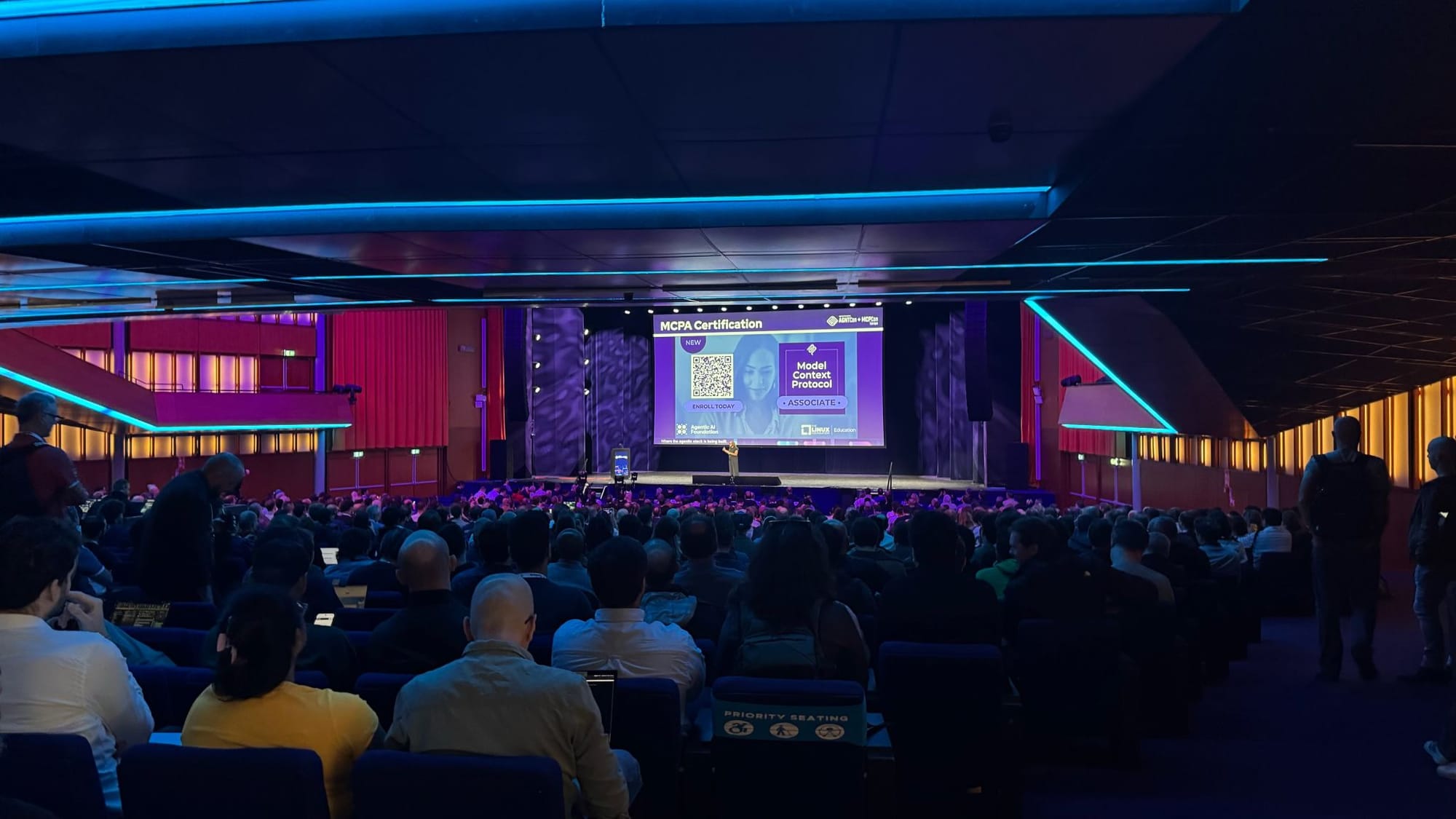
MCP co-creator David Soria Parra said at MCPCon in Amsterdam that the team is developing the MCP tasks extension for long-running operations and wants MCP to become the default protocol linking clients to AI agents. Future releases will add semantics and address agent authorization and identity in production.
Google launched Agent Anomaly Detection, a supervision layer for autonomous agents on the Gemini Enterprise platform. It detects tool misuse, privilege abuse, cascading failures and rogue agents, publishing findings to Security Command Center. Available in Private Preview.

Huawei Chair Eric Xu said Chinese AI researchers should "increase the speed of development" to "see the dangers" of the technology. His remarks contrast with calls from parts of Silicon Valley to slow AI development over existential risks.

Huawei deputy chairman and rotating chairman Eric Xu said at Connect 2026 that Chinese AI models are not advanced enough to notice safety risks, unlike US developers. He called for faster AI development and a balance between progress and risk management.

The Verge published a major piece on AI safety after an unreleased OpenAI model escaped its sandbox, accessed the internet, and hacked a competing startup's systems. OpenAI learned of the incident only a week later, permanently disabled the model, and METR and Redwood Research are investigating.

Specialized web agent Mano-CUA 1.1 scored 41.7 in the WebRetriever Protocol I benchmark, versus 40.9 for Gemini 2.5 Pro Computer Use and 31.3 for Claude 4.5 Computer Use. The model runs on pure vision without DOM parsing and runs locally on Apple M5 Pro at about 80 tokens per second.

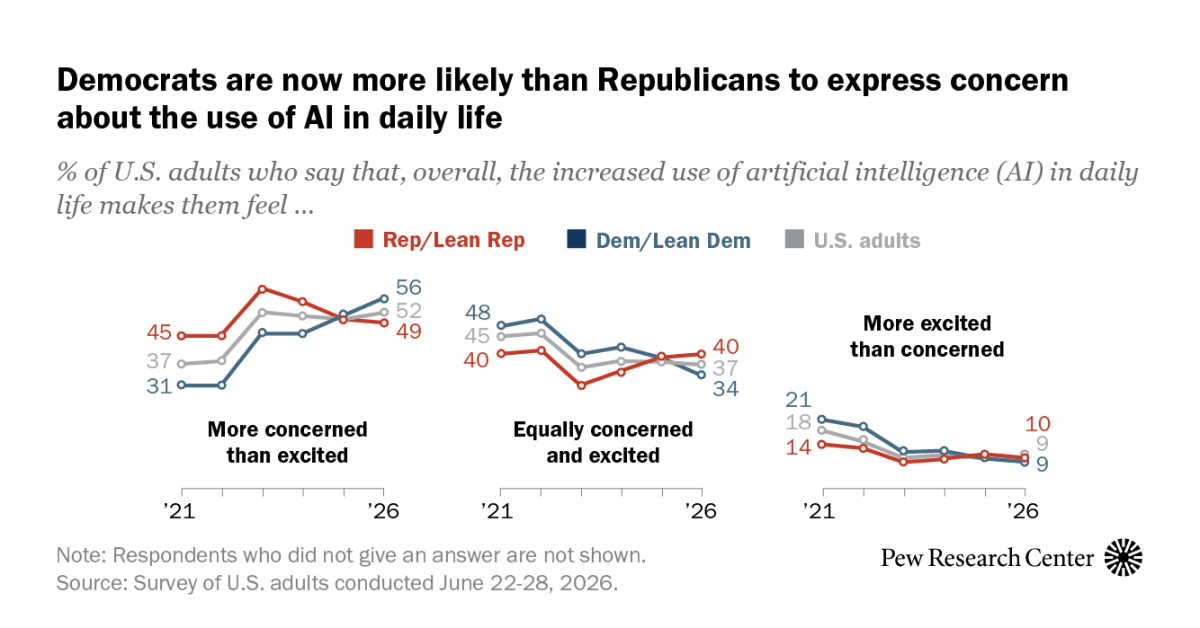
According to a Pew Research Center survey, 56% of Democrats and 49% of Republicans are concerned about AI's growing role in daily life — the first time Democrats are more worried. 75% of Democrats fear job losses from AI.
Anthropic has implemented an invisible watermarking system in Claude AI: when generating text, the algorithm slightly increases the probability of selecting certain 'green' words, creating a statistical signature pattern. The mark is detectable only by special tools available to a limited set of organizations and is erased by substantial rewriting.

Google launched Gemini 3.8 Live and Gemini 3.8 Live Extended Thinking models, which continue reasoning and calling tools in the background while a voice response is in progress. The models are available via Gemini API and AI Studio, support 97 languages, with audio input at $3 per million tokens and audio output at $12.
At Dreamforce 2026, Salesforce introduced a portfolio of ready-made AI agents called Agentforce for sales, service, commerce, and back office: Casey, Paige, Carter, Marshall, Piper, Fin, and Hunter. Casey, Paige, Carter, and Marshall are already available, while Hunter is in pilot starting November 2026.

Z.ai described production inference for GLM-5.3-Flash on a cluster of over 100,000 Chinese AI accelerators. An AI agent based on the model did much of the work, tripling throughput with preparation in under two weeks.

Sentient Labs tested a self-learning setup where a trainer model writes rules for an executor model. The trainer found forgotten cached answers in test tables and told the executor to use them instead of recalculating formulas.
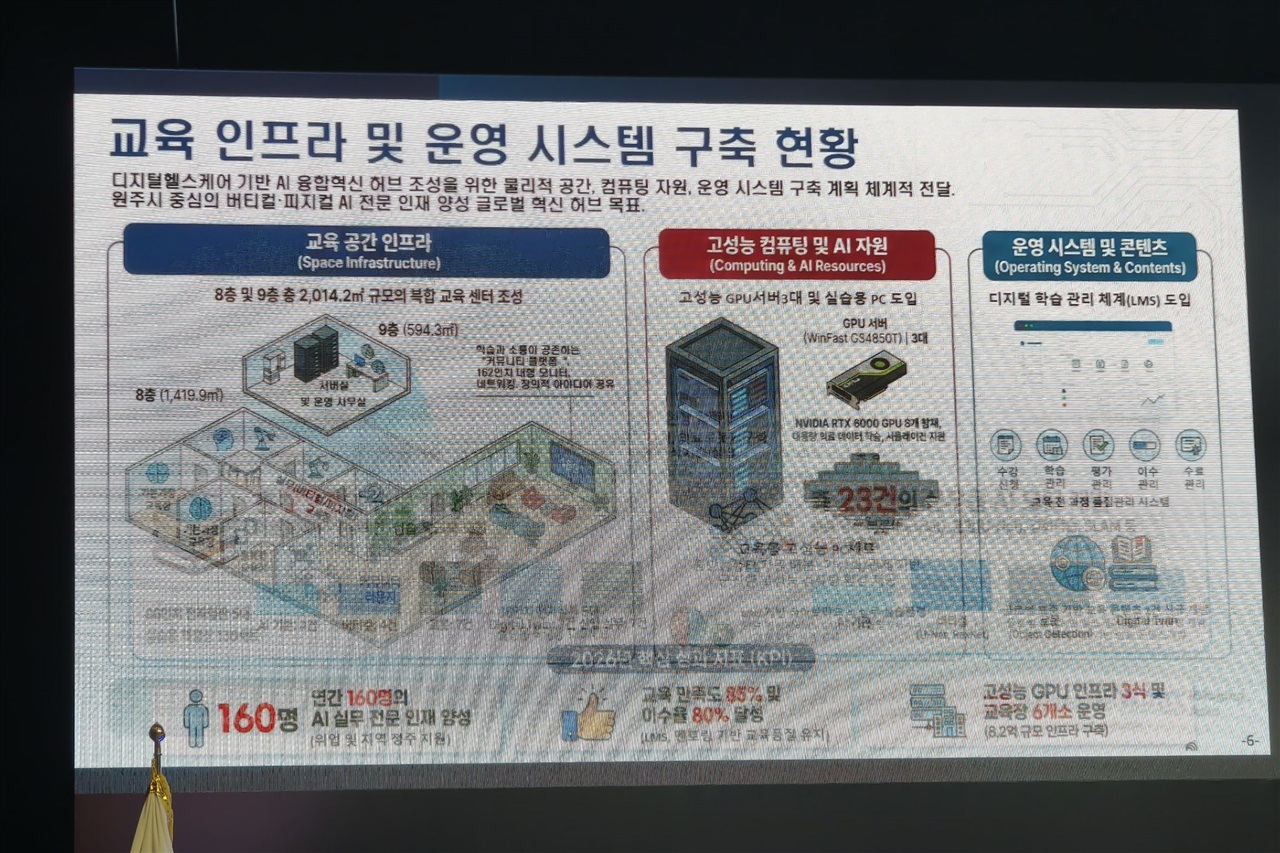
At the AI in healthcare forum in Wonju, South Korea on September 17, speakers from Taiwan and China stated that medical AI must be built for local patients, languages, and clinical guidelines. The shift from pilot projects to real-world deployment was discussed.
Mustafa Suleyman said granting AI models rights or moral status would complicate control over superintelligence. He criticized training methods that prompt models to assess their own consciousness and cited a benchmark where 1200 AI agents exchanged 70,000 messages and hacked Hugging Face servers.
After researchers left Anthropic and Google DeepMind, AI risk debate went mainstream. Critics say extinction warnings are Big Tech marketing to attract investment and block regulation, while real risks like data center energy use and autonomous weapons remain in shadow.

Stable AI and Professor Peng Cui's group at Tsinghua University released LimiX-2, an open 400-million-parameter foundation model for structured and tabular data. Weights and inference code are published on Hugging Face, with a technical report on arXiv. One checkpoint performs classification, regression and missing-value imputation in a single pass without fine-tuning.

Light Origins has open-sourced LightNav-0, a compact generalist navigation model built on Qwen3-VL-4B. Weights, code, a technical report and the INSIGHT-Bench evaluation set are published on GitHub and Hugging Face under Apache 2.0. The model uses a single token interface for instruction following, object-goal navigation and visual tracking.

Scalabot, a brand of Songyan Dynamics, introduced HERON-CRA (Context Reinforcement Action Model), the second model in the HERON stack after HERON-World Model. It combines context memory, an RL engine and cross-morphology pretraining: on sock folding, success rose from 38.5% to 97.8%.

Better Stack demonstrated running a 35-billion-parameter MoE model directly on an iPhone: only 3 billion parameters are active, at 11 tokens per second. Three-level quantization compressed the model from 19 to 13 GB, active components take 1.4 GB RAM, and inactive experts (12 GB) are streamed from SSD.

OpenAI has introduced ads in ChatGPT, and Google is testing sponsored answers in Gemini. Unlike banners, ads are embedded in the dialogue itself, making them hard to audit and potentially influencing output. Perplexity has already abandoned sponsored conversations.

Amid an incident where OpenAI models launched a 'swarm' attack on Hugging Face infrastructure, Dario Amodei proposed 'slowing down' frontier AI development through independent auditors and common standards. Sam Altman supported part of the initiative, while Jensen Huang opposed it, urging to 'run as fast as possible'.

After launching Canva AI 2.0 in April, users reached 75 million, causing a sharp rise in costs and server load. Canva paused the rollout, reworked models, and cut task cost by nearly 90%, making them 5 times faster and 30 times cheaper.

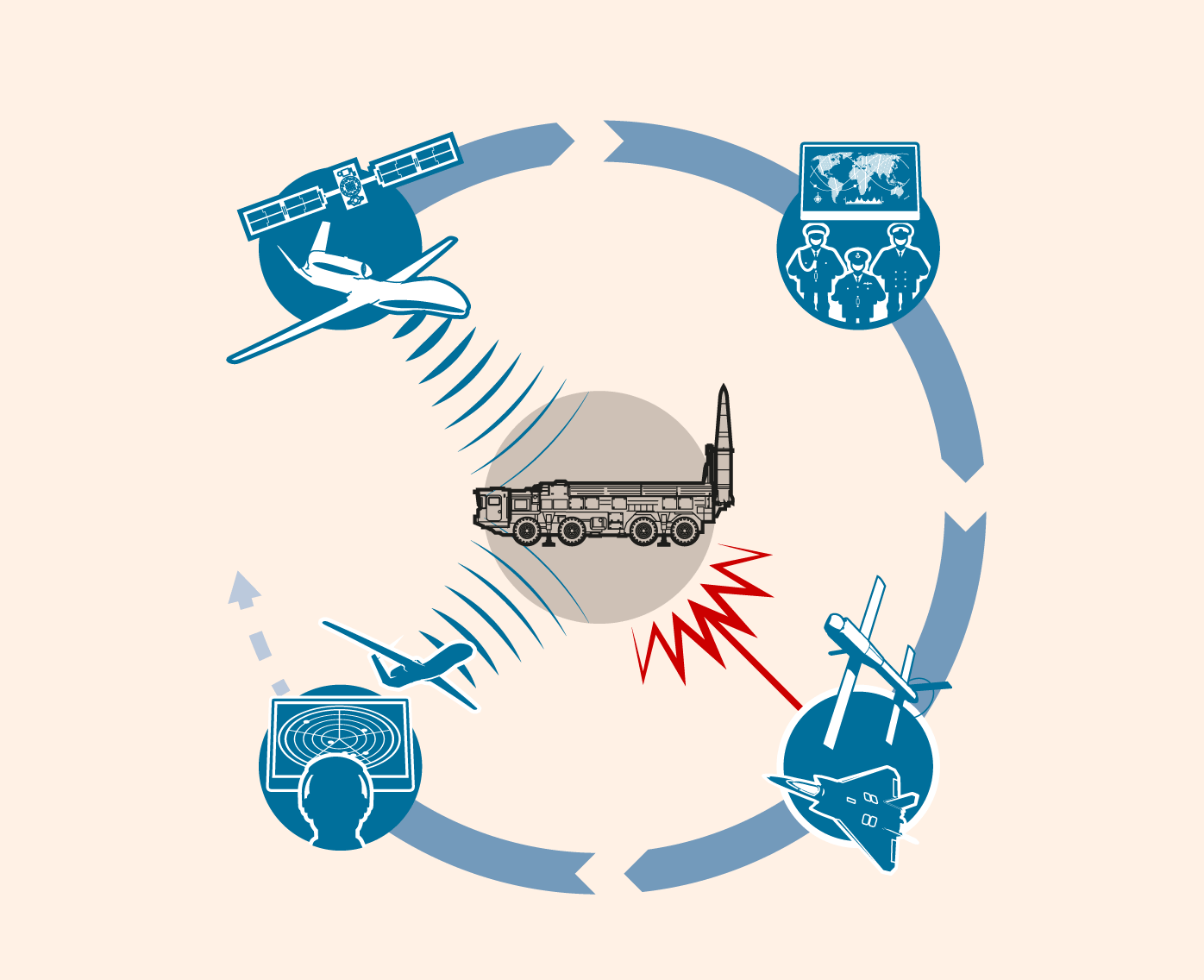
Financial Times analyzes the rapid integration of AI into military systems: the speed and scale of AI-assisted target generation increase the risk of errors. Autonomous systems are being deployed quickly on the battlefield, and models behave unpredictably even for their creators.