New nanoparticles make hidden chemical differences light up
University of Toronto engineers developed dye-sensitized nanoparticles that detect trace concentrations of chemicals and distinguish nearly identical molecules. The particles absorb near-infrared light and emit a green signal about 150 times brighter than conventional upconversion nanoparticles.
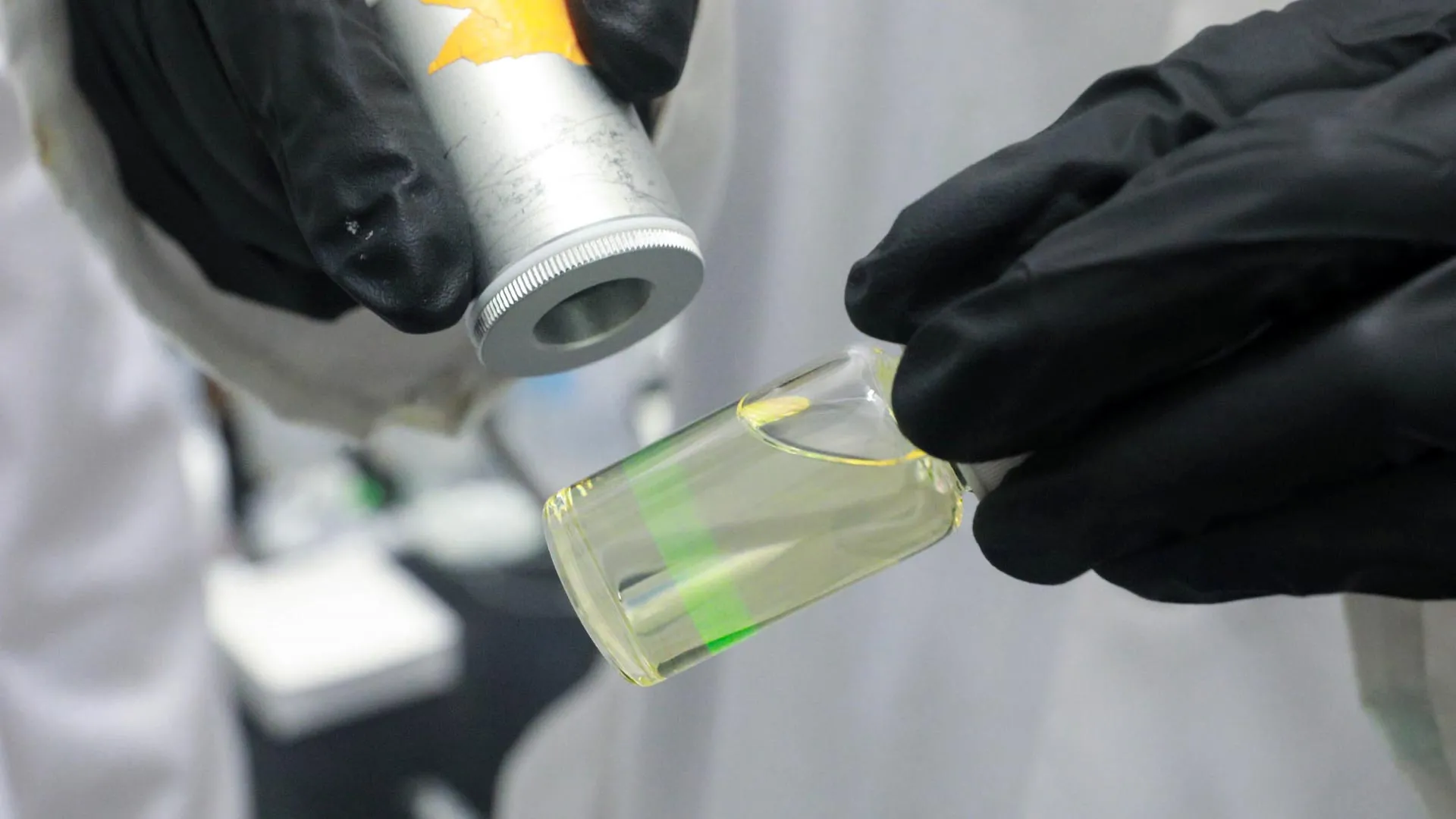
- Nanoparticles absorb near-infrared and emit green light
- Signal about 150 times brighter than non-sensitized analogs
- New matrix of lithium, lutetium and fluorine instead of sodium, yttrium and fluorine
- Applications: drug impurities and water contaminants
Read next
Science