Magnets Implanted in Muscles Give Prosthetic Hand a Sense of Movement
Researchers at Sant'Anna School in Pisa and Cleveland Clinic found the brain perceives finger movements as coordinated patterns rather than isolated actions. A magnet-based interface implanted in the forearm let a 34-year-old participant feel his prosthetic hand open and close naturally over a six-week trial.
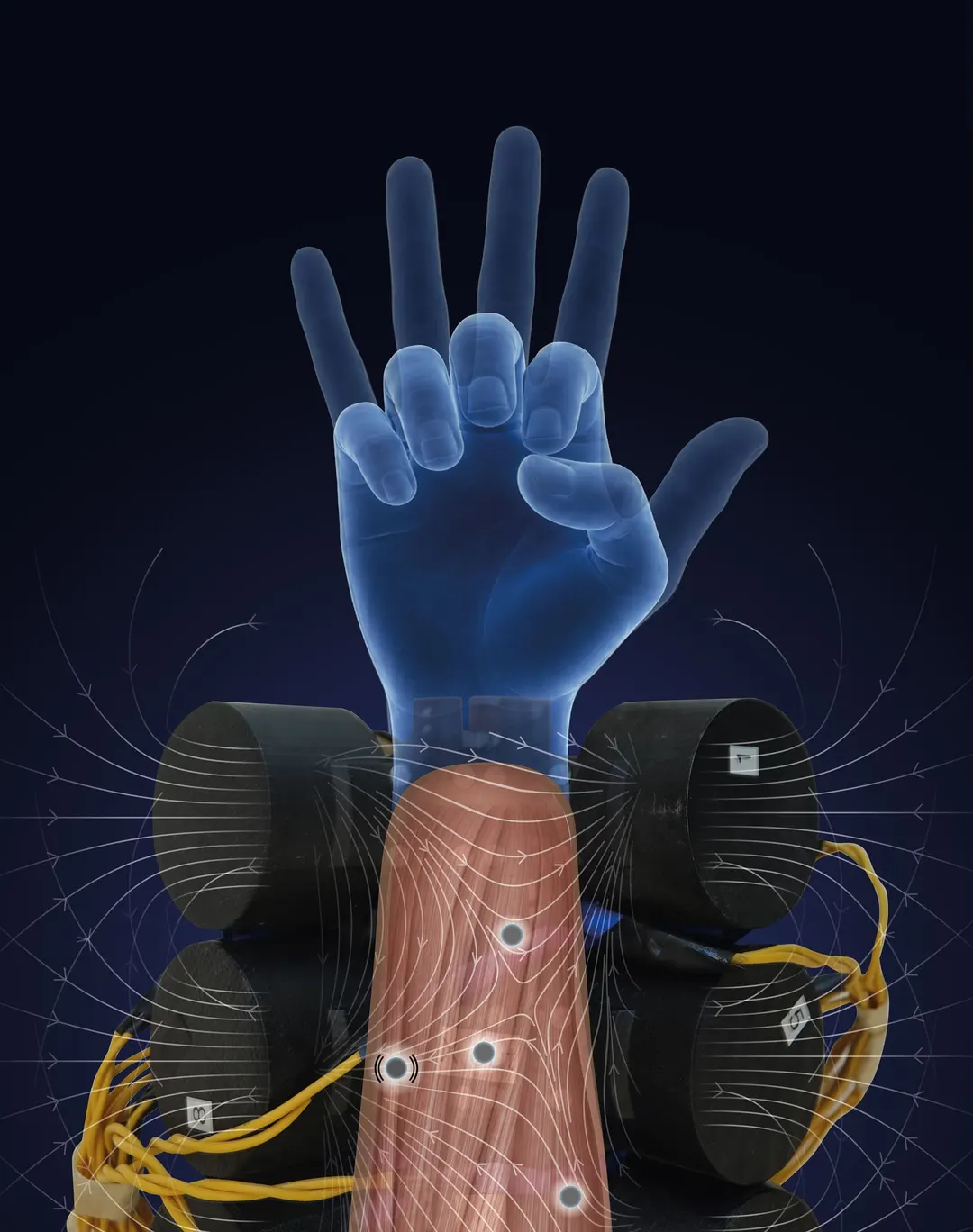
- Magnets in residual forearm muscle vibrate without stimulating the skin
- A 34-year-old tested the interface with the Mia Hand prosthesis for six weeks
- Both existing neural interfaces produced sensations of coordinated finger movement
- Next step is a permanent implant for control and sensation at once
More stories in swipe mode🔥 Trending now: OpenAI dropped GPT-6.1 Terra — and cut the price per token
Read next
Science