ETH Zurich 3D prints facade elements using bacteria
Researchers at ETH Zurich used Sporosarcina pasteurii bacteria to 3D print architectural elements: a hydrogel ink laced with bacteria is printed into a form and soaked in urea and calcium chloride, where the bacteria precipitate calcium carbonate and bind sand. The process takes up to five days and may use far less energy and emit less CO2 than conventional construction.
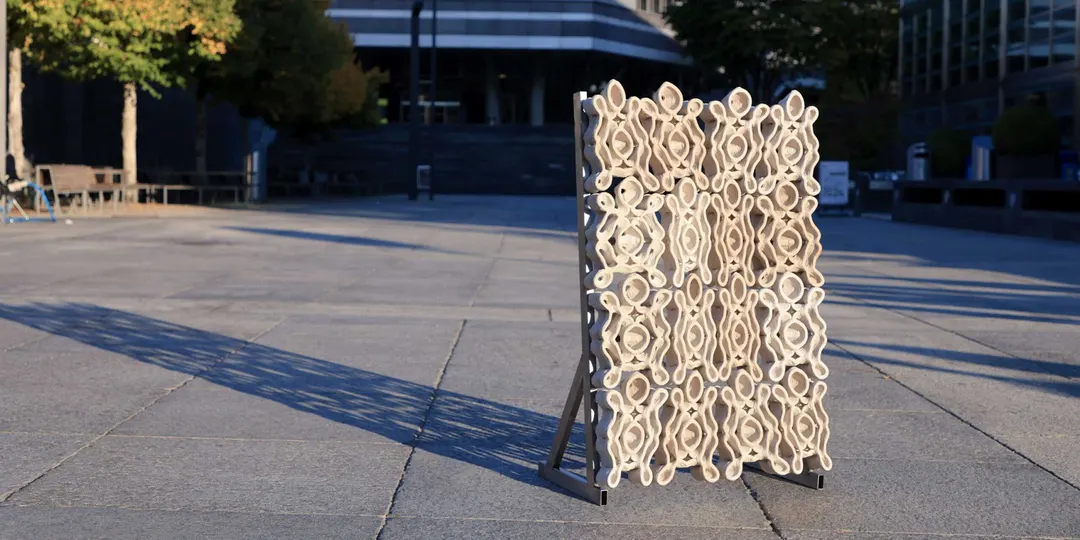
- Sporosarcina pasteurii bacteria precipitate calcium carbonate to bind sand into biocement
- Alginate and xanthan hydrogel ink with bacteria is printed into a form and cured in urea and CaCl2
- The full cycle takes up to five days, including the material's curing stage
- The method was shown at the 2025 Venice Architecture Biennale; robotic spraying is also being tested
Read next
Science