Satellites reveal two independent magma reservoirs beneath Masaya volcano
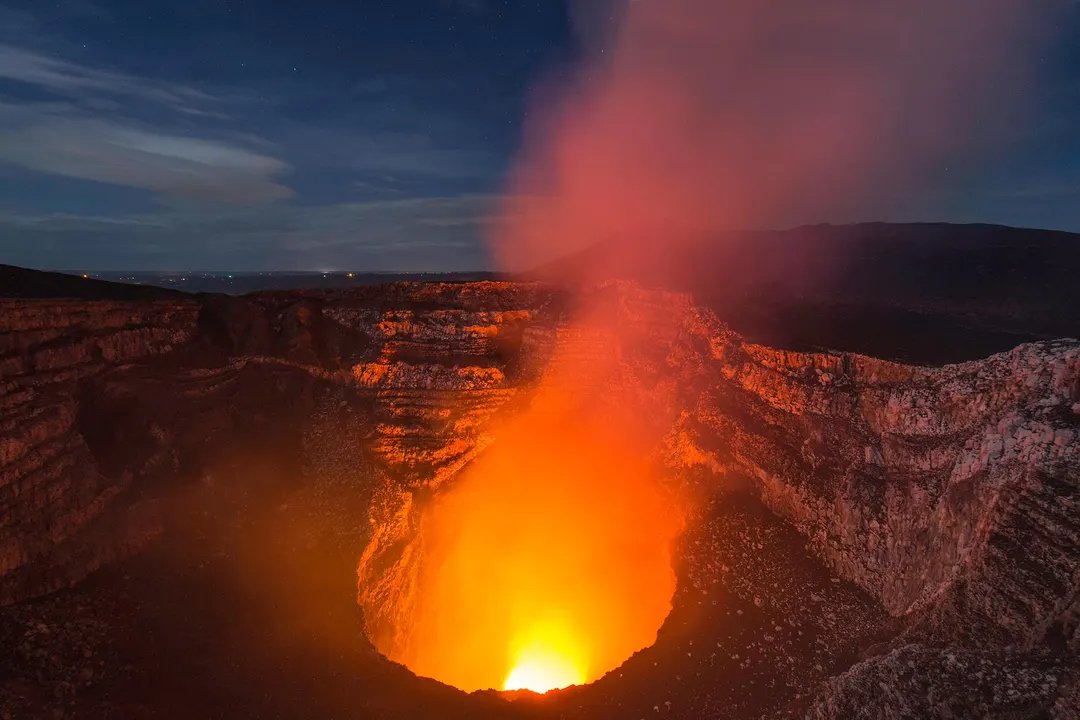
Penn State researchers used Sentinel-1 radar data from 2018 to 2024 to show that Masaya's caldera in Nicaragua first sank and then rose, while the ground around Santiago crater kept subsiding. The findings point to two independently changing magma reservoirs.
- Sentinel-1 imaged Masaya roughly every 12 days using InSAR
- The caldera sank then began rising between 2018 and 2024
- Ground near Santiago crater subsided throughout the study
- About 2 million people live within 21 km of the volcano
Read next
Science