Webb studies 21 extreme debris disks, finds signs of Mars-sized collisions
Astronomers used NASA's James Webb Space Telescope and archival Spitzer data to study 21 extreme debris disks around young stars. About one-third are silica-rich, likely produced by high-energy collisions between Mars-sized bodies similar to the Theia impact that formed the Moon. The findings were published Oct. 1 in The Astrophysical Journal.
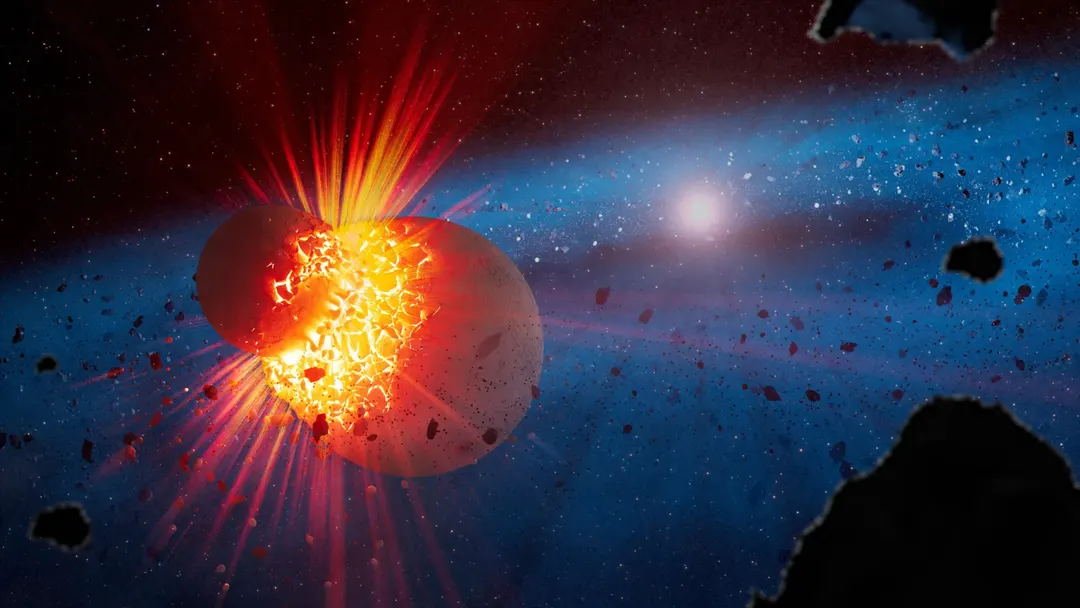
- 21 extreme debris disks studied: 16 Webb observations and 5 archival Spitzer ones
- One-third of disks are silica-rich, pointing to Mars-sized high-energy impacts
- Silica-rich disks appear only around stars younger than 300 million years
- Only about 1% of young stars show signs of an extreme debris disk
Read next
Science