Astronomers split planet crashes into two types by dust composition
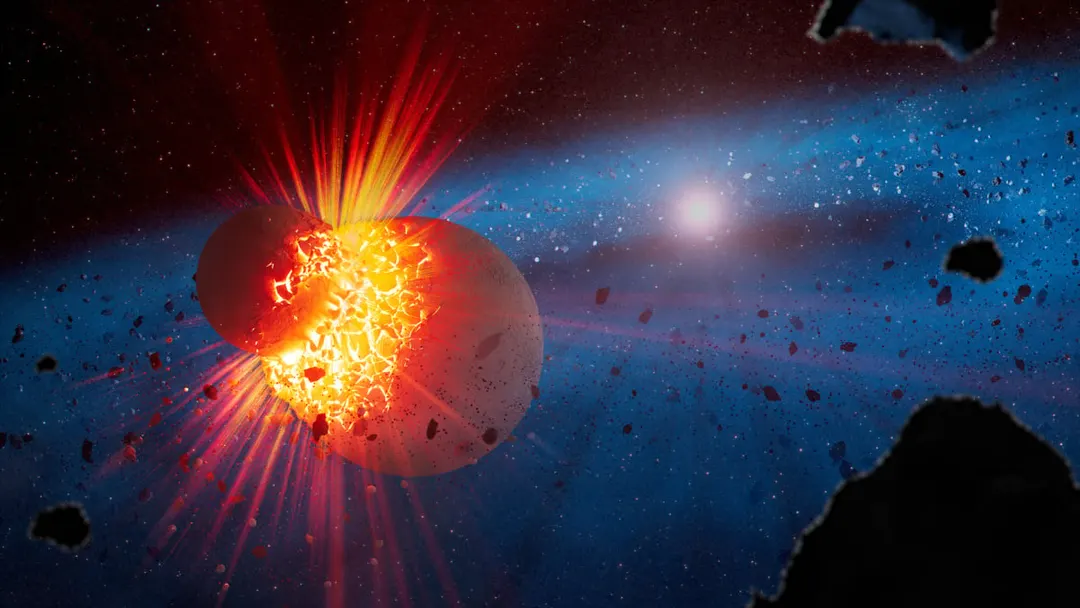
Studying 21 young star systems with "extreme debris disks," astronomers using Spitzer and James Webb found two dust types: silica-rich glass from vaporizing impacts and forsterite-rich dust from glancing blows. Glassy debris appears only around stars younger than about 300 million years.
- 21 young systems with warm dust in the rocky-planet zone were studied
- A third of systems show silica-rich dust from vaporizing Mars-size impacts
- Two-thirds are dominated by forsterite from glancing collisions
- Glassy dust appears only around stars younger than 300 million years
Read next
Science