Simulations May Explain Webb's Strange Little Red Dots
Researchers at the Max Planck Institute for Astrophysics used the ATERUI III supercomputer to simulate the early universe and suggest Webb's Little Red Dots mark a rapid growth phase of supermassive black holes. Far-ultraviolet radiation from nearby galaxies suppressed small stars, letting gas collapse into a single supermassive star whose collapse left a black hole seed inside a dense gas disk.
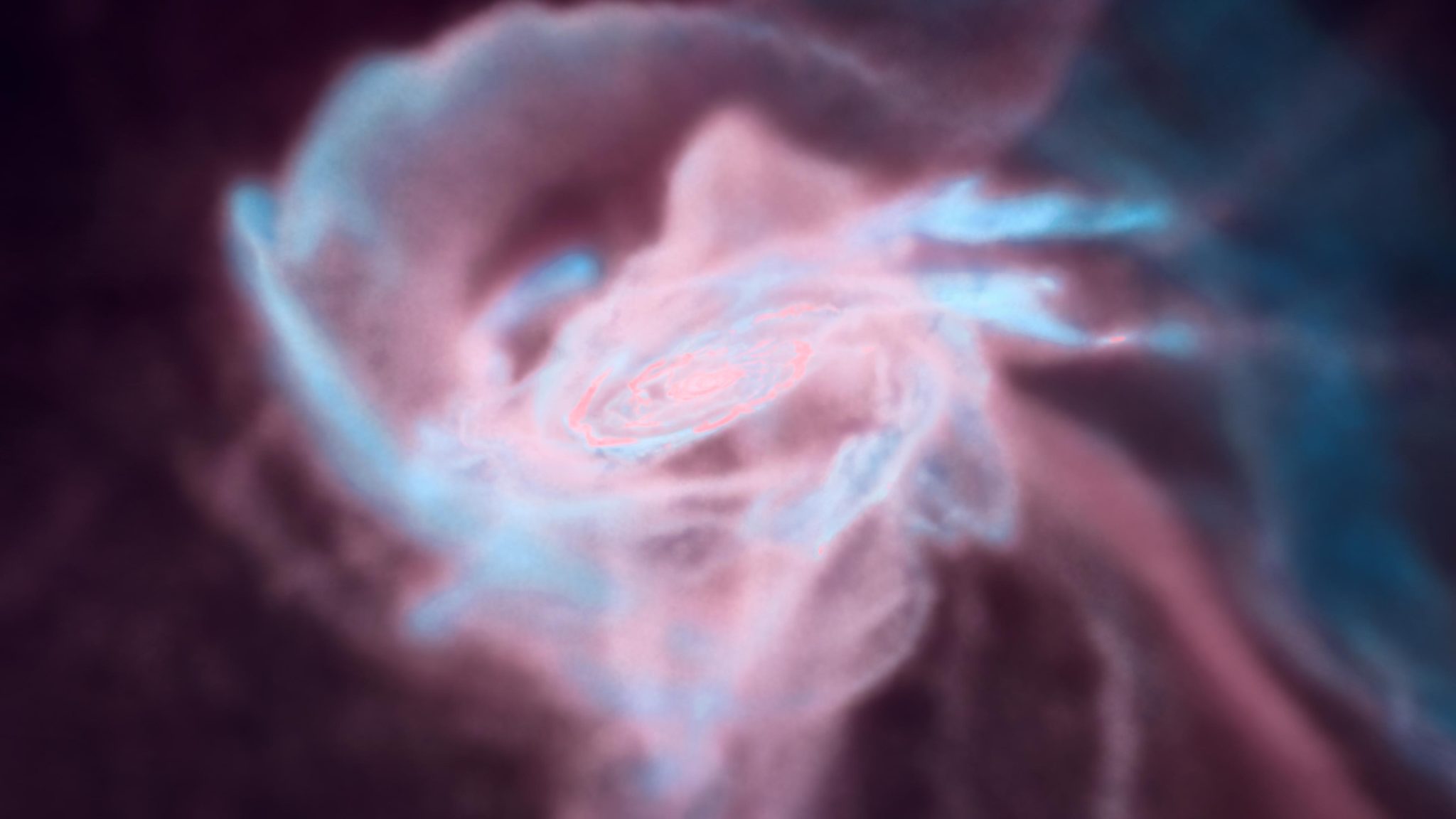
- Supermassive black holes of billions of solar masses existed just 600 million years after the Big Bang
- Far-UV radiation from neighboring galaxies suppressed small stars, letting gas form one supermassive star
- A dense gas disk around the seed let the black hole grow dozens of times faster
- Simulated black holes matched Webb's observations; the study appeared in Nature
Read next
Science