Astronomers find statistical evidence of recoiling supermassive black holes
Researchers at the University of Birmingham analyzed about 100,000 quasars from SDSS Data Release 16 and found that the fastest-moving black holes are three times more likely to be obscured by dust. The population-level correlation is the first statistical evidence that uneven gravitational waves can kick a merged black hole out of its galactic center.
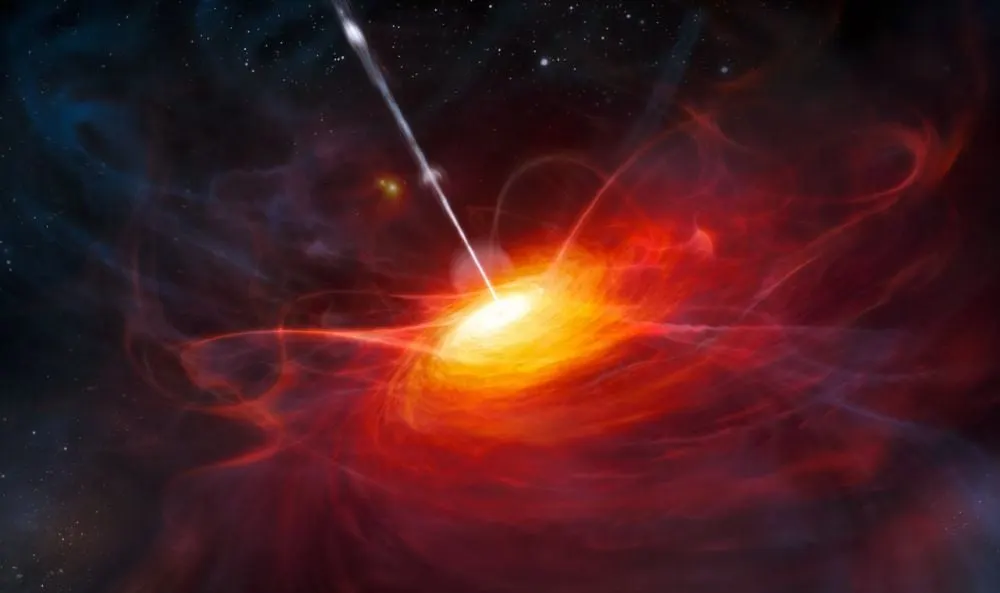
- About 100,000 quasars from SDSS DR16 were analyzed
- Recoil velocities range from 360,000 to 3.6 million km/h
- Fastest black holes show three times the obscured fraction
- Recoil persists 10–100 million years after merger
Read next
Science