Webb decodes weather of brown dwarf SIMP 0136, 20 light-years away
Astronomers at Trinity College Dublin used James Webb Space Telescope observations and principal component analysis to study brightness changes of the brown dwarf SIMP 0136. Nearly all of its atmospheric variability comes down to temperature and the vertical structure of clouds, with three recurring weather states appearing as the object rotates.
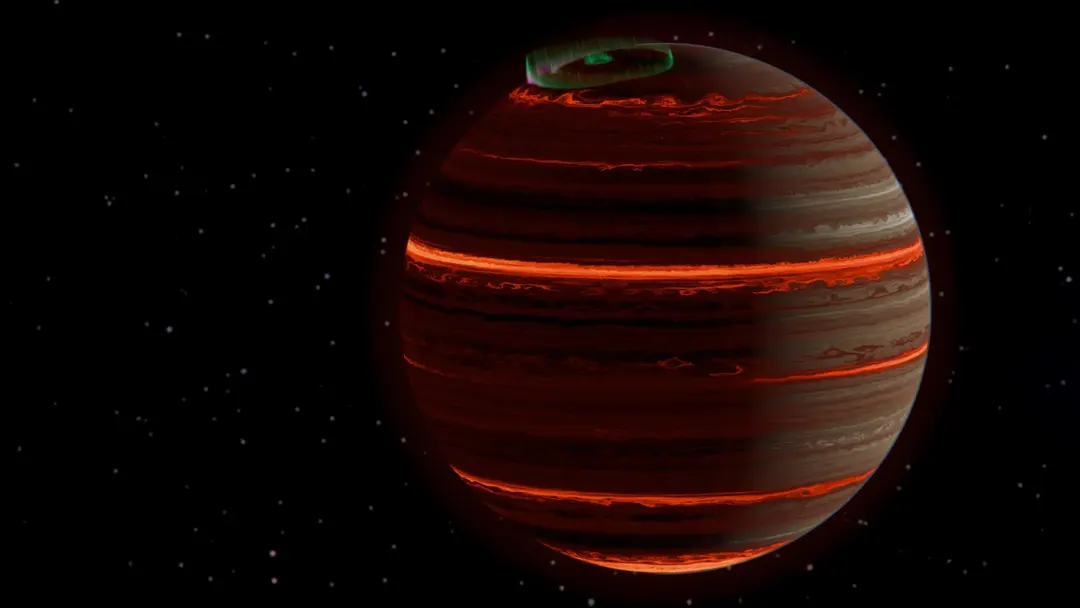
- Principal component analysis reduced the weather to two drivers: temperature and cloud height
- Three recurring weather states cycle in and out of view as the brown dwarf rotates
- Webb's 2023 light left SIMP 0136 about 20 years earlier, the year the lead author was born
- The technique can be applied to other brown dwarfs and giant exoplanet atmospheres
Read next
Science