Google put AI chips in orbit: radiation is not the problem, heat is
On October 1 a Falcon 9 launched the first Project Suncatcher prototype: a fridge-sized satellite carrying four Trillium (v6e) TPUs with roughly 1 kW of solar power in a dawn-dusk orbit. Radiation tests at UC Davis showed a 20x margin, but in orbit the chips run Gemini queries in ~15-minute bursts before radiators must shed the heat.
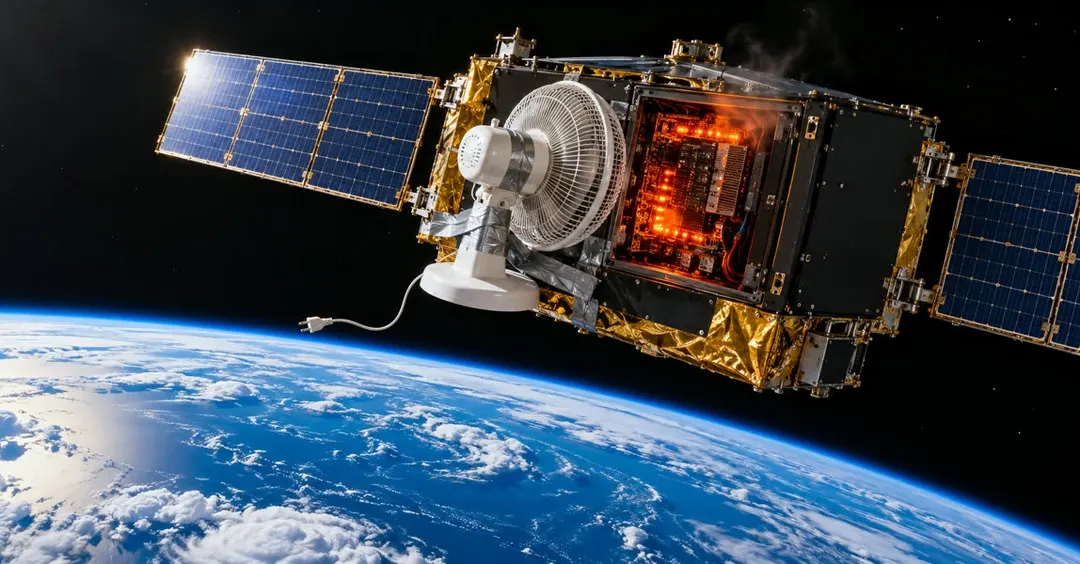
- The MVP satellite carries 4 Trillium TPUs in a v6e-4 config with ~1 kW of solar power
- 67 MeV proton testing: 15 krad with no permanent failures vs 0.75 krad over five years in orbit
- No convection in vacuum: chips run ~15-minute bursts, then must pause to cool
- Google says launch costs must fall to ~$200/kg by the mid-2030s; two laser-linked satellites planned for 2027
Read next
Science