Ocean Acidification Strips Phytoplankton of Phosphorus, and Evolution Can't Undo It
A Nature Geoscience study found that under elevated CO₂ (1,000 µatm) and low phosphate, the diatom Thalassiosira pseudonana sheds cellular phosphorus by swapping membrane phospholipids for sulfur- and nitrogen-based lipids. The phosphorus loss reversed when CO₂ changed, but growth gains persisted, confirmed by mesocosms and Tara Oceans data.
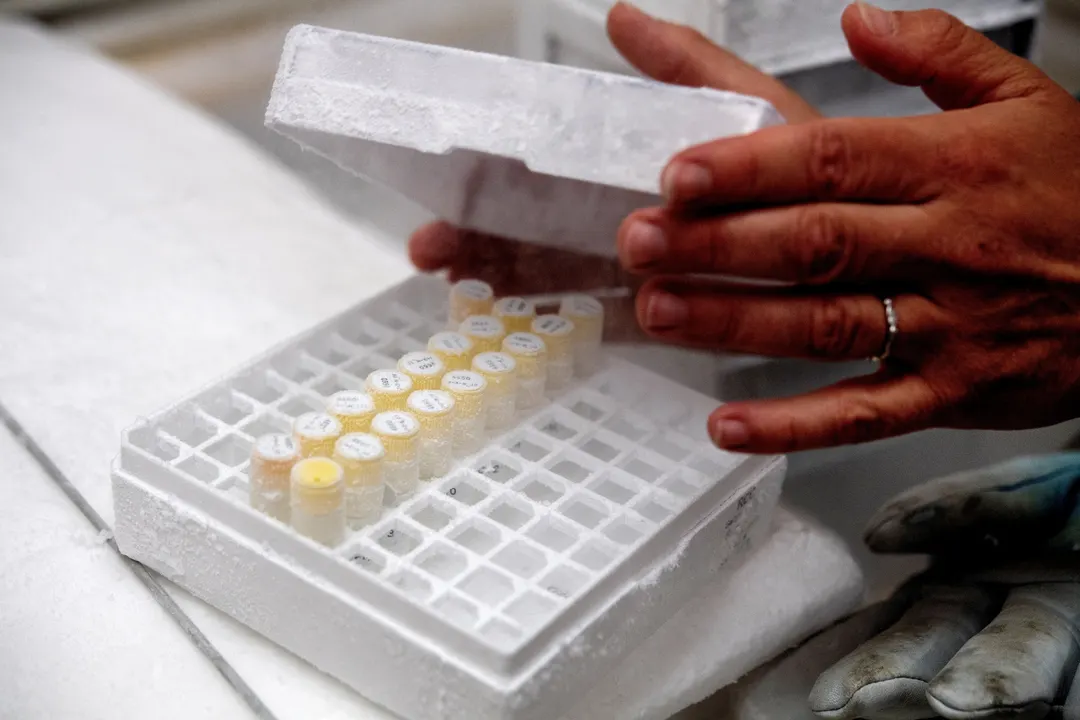
- Selection experiment spanned over 1,000 generations of Thalassiosira pseudonana
- CO₂ at 1,000 µatm versus 420 µatm crossed with high and low phosphate
- Cells replace membrane phospholipids with sulfur- and nitrogen-based lipids
- Subtropical gyres cover roughly 40% of the ocean surface
Read next
Science