Wandering Black Holes May Hold Clues to the Evolution of the Universe
Researchers from Yale and the University of North Texas used the ASTRID cosmological simulation to trace galaxy evolution over 12.6 billion years, finding that wandering black holes are supermassive black holes displaced from galactic centers by mergers. The results were published in The Astrophysical Journal Letters.
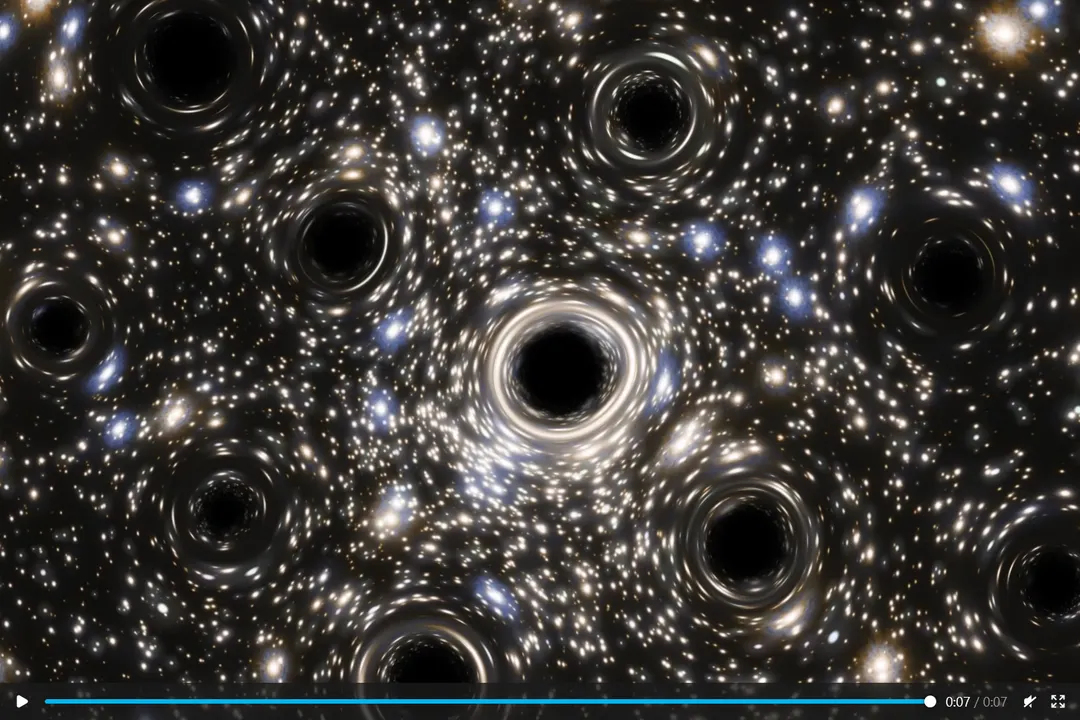
- The ASTRID simulation covered galaxies with stellar masses from 10 million to 1 trillion solar masses
- Wandering black holes are more common in low-mass galaxies with weaker gravity
- Quenched galaxies more often keep black holes at their centers, star-forming ones tend to lose them
- The findings could link X-ray, optical and radio observations to galaxy histories
Read next
Science