Antarctic ozone hole peaks at 27.4 million sq km, second-largest on record for the season
On Sept. 20 the Antarctic ozone hole reached 10.6 million square miles (27.4 million sq km), the second-largest extent ever observed for that time of year after 2015. Scientists attribute it to an unusually strong polar vortex and record-cold stratospheric temperatures, not to a failure of the ozone layer's recovery.
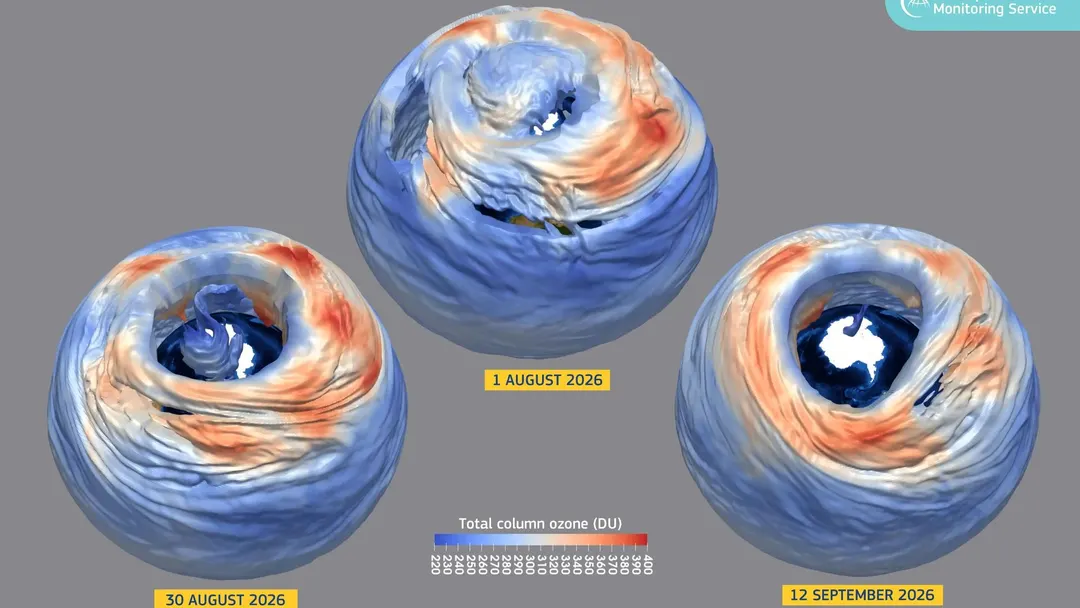
- Sept. 20 peak of 27.4 million sq km is second only to 2015 for the season
- Area has since shrunk to about 24 million sq km, so the 2015 record stands
- Cause is a strong polar vortex and stratospheric temperatures below minus 78 °C
- Recovery from CFC damage is still expected to take about six decades
Read next
Science