MIT and Johns Hopkins Build 3D Printed Device for Early Cancer Detection
Researchers at MIT and Johns Hopkins University have developed a handheld tool built around a 3D printed microfluidic device that collects living cells from freshly excised tissue while leaving the rest available for pathology. The method could support earlier detection of ovarian cancer and other cancers, and may eventually test how a patient's cells respond to treatment. The findings appear in the journal Device.
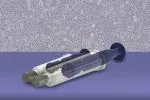
- The device uses two syringes: one creates a vacuum seal, the other pushes liquid through a microfluidic chip
- It works without chemicals or enzymes, and harvested cells stay viable and grow in culture better than with conventional methods
- Five-year ovarian cancer survival exceeds 90% when caught early and drops by more than half at stage 3 or 4
- Different cells detach at different shear levels: prostate cancer at 1 pascal, bone cancer only partly at 5 pascals
Read next
Science