Sun Could Produce a Superflare: 1947 Great Sunspot Reached the Threshold
Researchers at the Max Planck Institute and the University of Colorado Boulder linked active region and flare ribbon size to flare energy. The Great Sunspot of 1947 covered 0.6% of the solar disk and stored energy at the low end of the superflare regime, but the Sun never erupted.
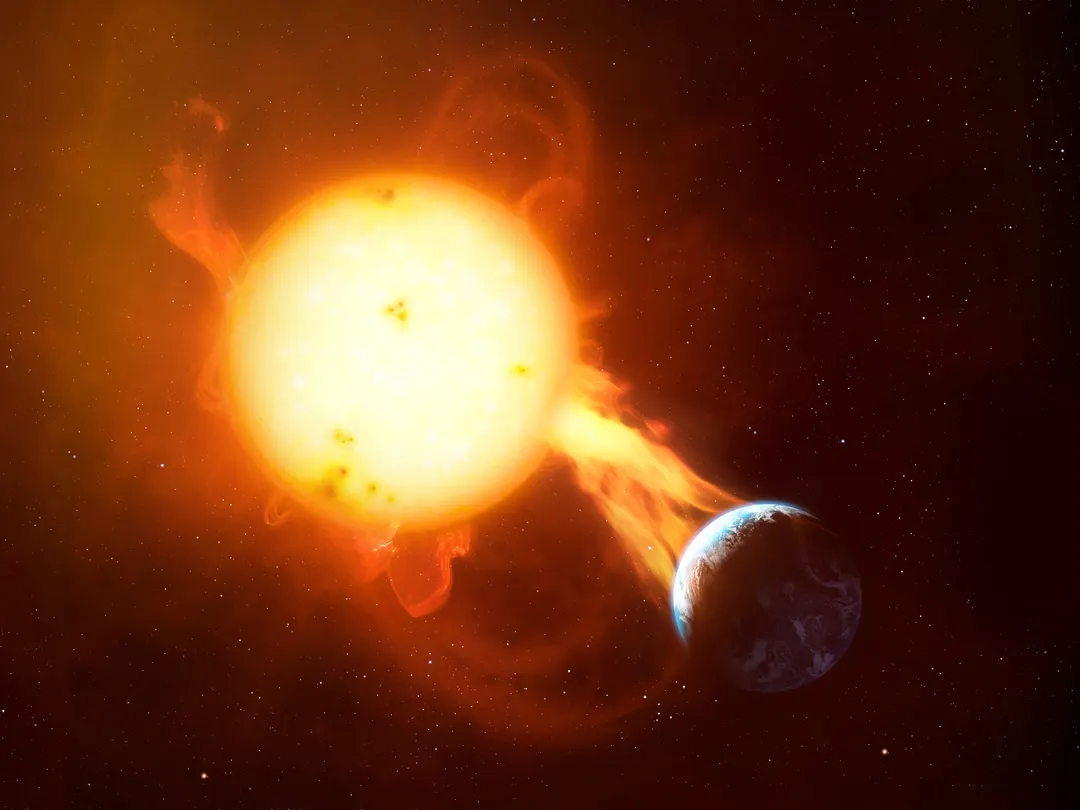
- The 1947 sunspot covered 0.6% of the solar disk, about 40 Earth diameters
- Its stored energy reached the low end of the superflare range, but no eruption followed
- Kepler data show 20% of 56,450 sun-like stars produced superflares roughly once a century
- A superflare is 100 to 10,000 times stronger than a normal solar flare and can damage transformers
Read next
Science