UW Nobel laureate's institute uses AI to design molecular scissors for disease proteins
Researchers at the UW Medicine Institute for Protein Design, led by 2024 Nobel laureate David Baker, used AI to design proteases that cut proteins linked to Alzheimer's disease and ALS. Some enzymes cleave their target up to 100 million times faster than uncatalyzed reactions, with 19–35% precision. Two papers appear in Nature.
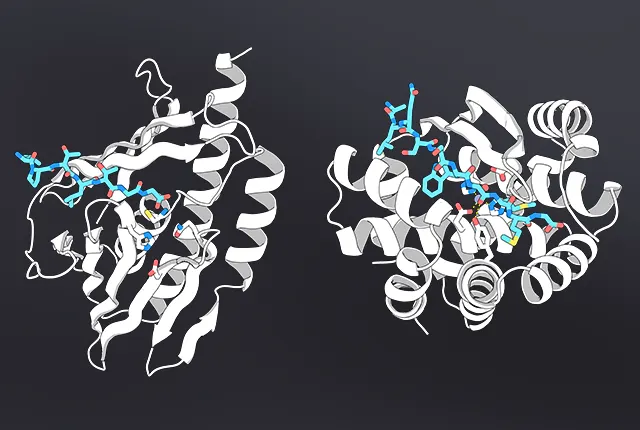
- Metal-ion proteases cut an Alzheimer's-linked protein 100 million times faster than without the enzyme
- A cysteine-based variant achieved 19% precision and up to 30 million times faster cutting
- More than one-third of the new proteases precisely cleaved their target
- Human use still requires solving the immune response to the enzyme
Read next
AI