Scientists boost reaction selectivity from 16% to 97% via local pH
A team led by Professor Jaeyune Ryu at Seoul National University found that acidity right at the electrode surface (local pH) decides whether a reaction succeeds. By tuning electrode spacing and liquid flow, they raised the yield of the desired product from about 16% to 97% without adding peroxide oxidants.
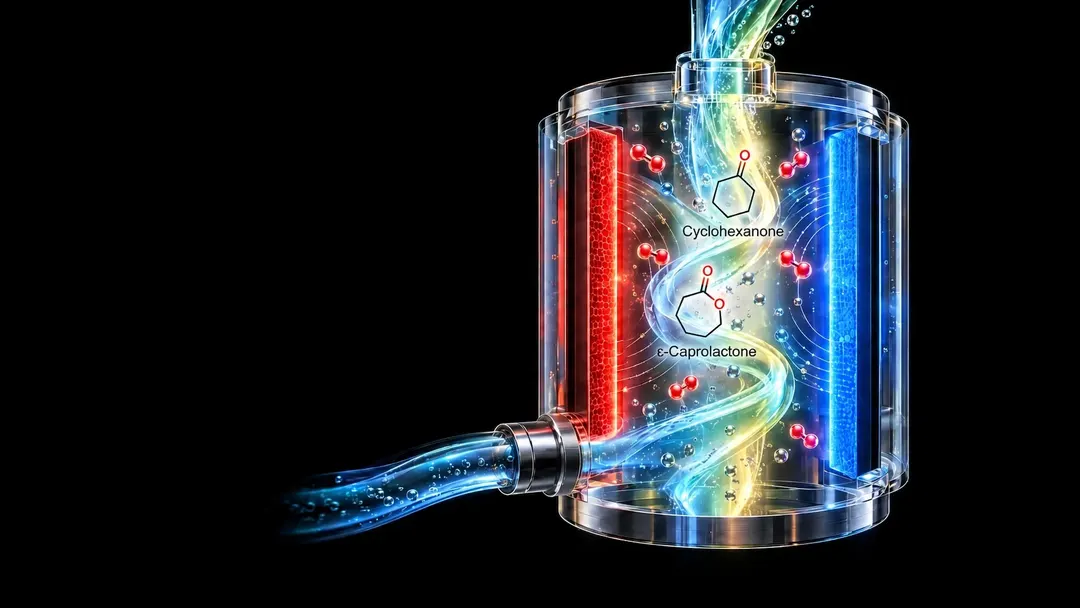
- Reaction selectivity rose from ~16% to 97% by controlling local pH
- Near the cathode pH reaches ~11, near the anode ~2.5 even in a neutral solution
- 89% of 600+ organic electrosynthesis papers since 2010 involve proton transfer
- Method yields lactones and epoxides for plastics, adhesives and drugs without peroxides
Read next
Science