Scientists explain 1,100-mile Mars cloud via homogeneous nucleation
Astrophysicist Jorge Hernández Bernal and colleagues, writing in Nature Geoscience, attribute the elongated Arsia Mons cloud (AMEC) on Mars to homogeneous nucleation — water vapor freezing directly into ice without dust particles. The cloud forms daily at sunrise over the 11-mile-high volcano and vanishes within three hours.
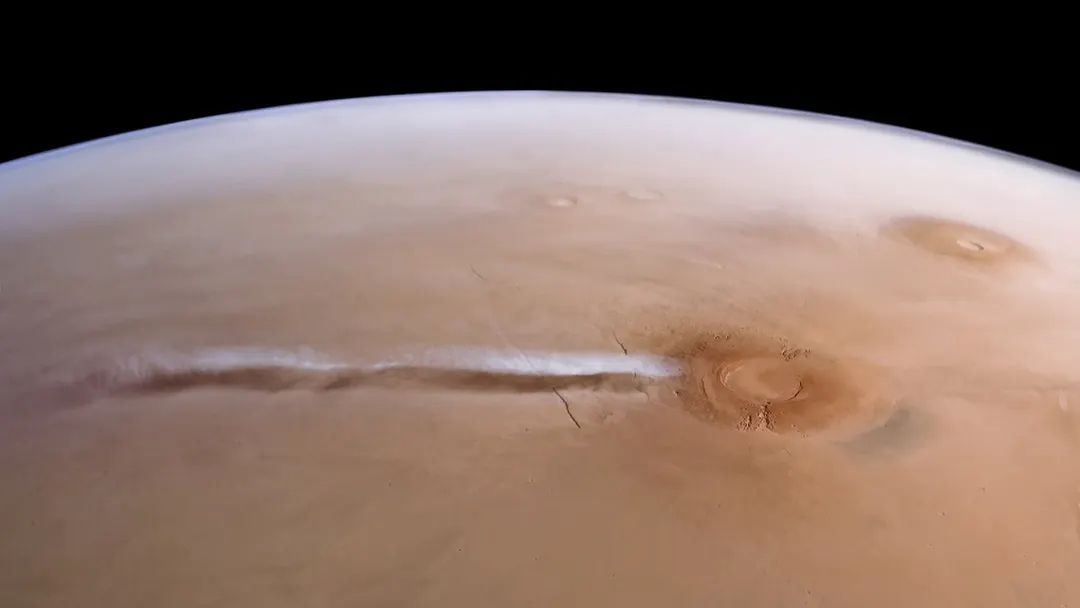
- The AMEC cloud stretches about 1,100 miles over the Arsia Mons volcano
- It forms at sunrise and disappears within three hours, complicating observations
- Computer models reproduced its long tail only with dust-free homogeneous nucleation
- Humidity in the cloud's formation zone exceeds Earth's by over 100,000 times
Read next
Science