Gut bacteria molecule linked to Alzheimer's brain changes
A University of Wisconsin-Madison study in Nature Communications measured imidazole propionate (ImP) in the blood of 1,196 adults without cognitive impairment: those with higher ImP declined faster on thinking tests and showed more markers of Alzheimer's-related protein damage and nerve cell injury. A gene variant raising ImP was tied to 16% higher odds of Alzheimer's per step. In mice, ImP increased amyloid plaques and made the blood-brain barrier leakier.
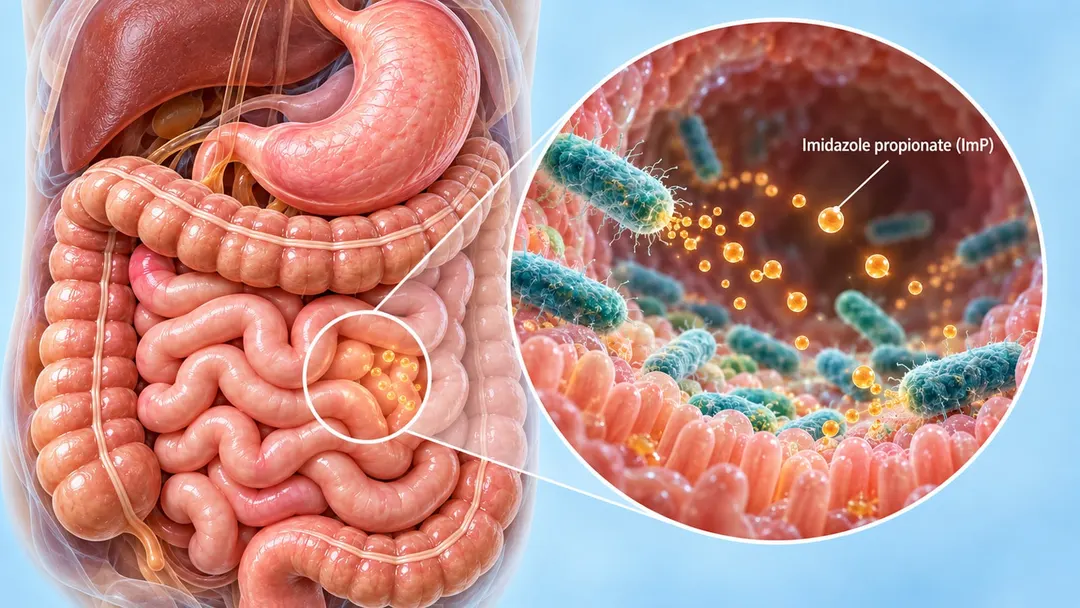
- ImP was measured in 1,196 adults with an average age of 61 and no cognitive impairment
- Each step of genetically predicted ImP raised Alzheimer's odds by 16%
- In mice, ImP increased amyloid plaques and blood-brain barrier leakiness
- The link is shown, but causation is not proven and no 'high' ImP threshold exists yet
Read next
Science