Venus may have swallowed its own moon
UC Riverside astrophysicist Stephen Kane modeled Venus's interaction with a hypothetical moon and found that its extremely slow rotation (243 Earth days per turn) caused the satellite to spiral inward and crash into the planet. The study was published in The Astrophysical Journal.
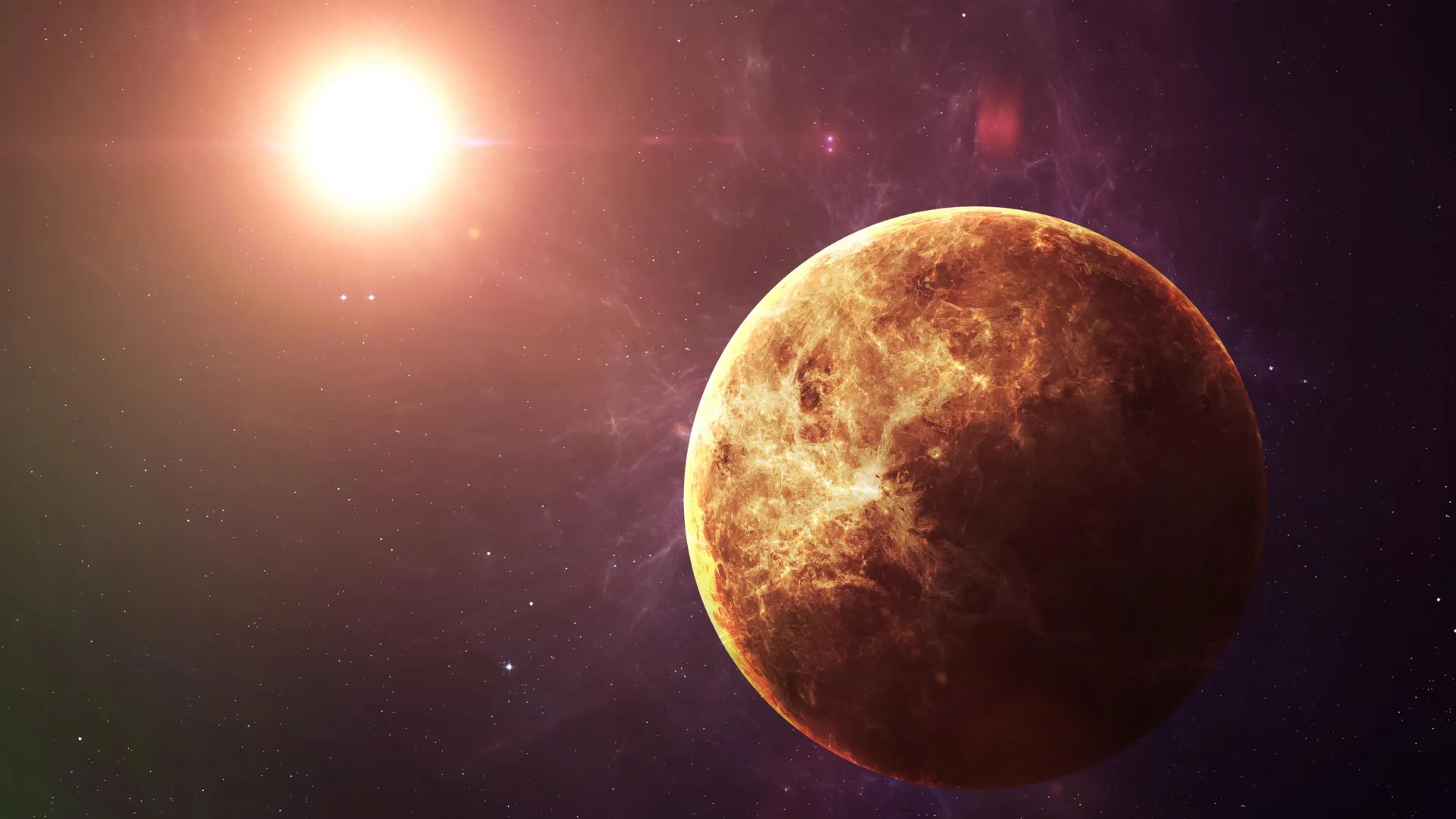
- Venus rotates once every 243 Earth days, too slow to repel a moon
- Models with moons of 0.5 to 10 Earth-moon masses all ended in a crash
- About 80% of Venus's surface shares the same age from a global resurfacing ~1 billion years ago
- Collision traces may persist in the planet's interior, not on the surface
Read next
Science