Scientists capture proton-coupled electron transfer with solvent reorganization in detail
Researchers at PNNL and SLAC used two ultrafast X-ray techniques to track how a ruthenium-based molecule absorbs light, gains a proton and reorganizes surrounding water. Published in Nature Communications, the work sheds light on proton-coupled electron transfer central to photosynthesis, metabolism, fuel cells and catalysts.
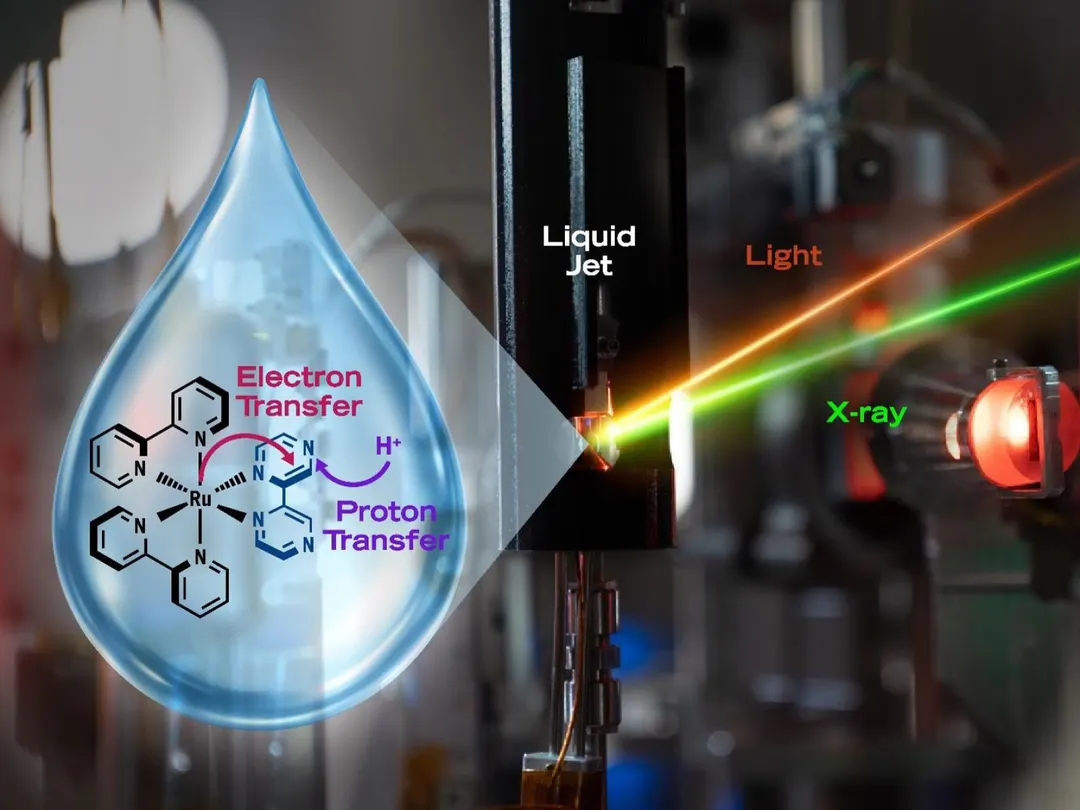
- Combined chemRIXS X-ray absorption spectroscopy and XCS scattering at SLAC's LCLS
- First link between electronic changes of proton transfer and solvent reorganization
- Studied a ruthenium complex that captures a proton under acidic conditions
- Findings published in Nature Communications
Read next
Science